The most recent publications related to mathematical modeling and simulation can be found here.
A historical development of applied mathematical nutrition models (MNM) at Cornell University has been documented by Chalupa and Boston (2003), Sniffen (2006), and Tedeschi and Fox (2014).
A free-of-charge copy of Rumen Microbiology and its Role in Ruminant Nutrition, by Dr. Jim Russell, can be downloaded here.
Ruminant Nutrition System (RNS) Books
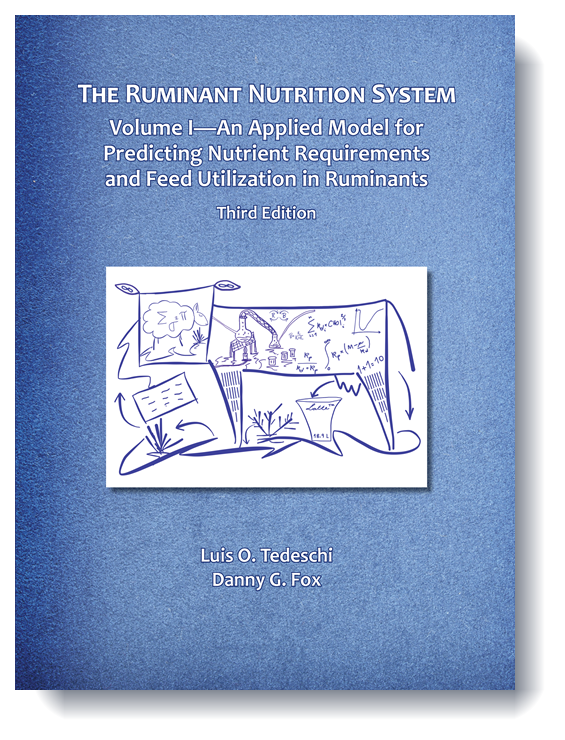
The Ruminant Nutrition System has two volumes now. To facilitate the dissemination of the computer model, we are publishing An Applied Model for Predicting Nutrient Requirements and Feed Utilization in Ruminants (RNS) as Volume I (the "blue" book) and the Tables of Equations and Coding (TEC) as Volume II (the "red" book) of The Ruminant Nutrition System publications. You can get the latest books as hardcover or paperback (and digital) editions from Kendall-Hunt (hardcover: Volume I and Volume II, or softcover: Volume I and Volume II), or Amazon.com (Volume I and Volume II).
The first edition of The Ruminant Nutrition System: An Applied Model for Predicting Nutrient Requirements and Feed Utilization in Ruminants was published in October 2016. Since then we have received much positive feedback, which has encouraged us to revise and expand it. In the second edition, we updated concepts and added new information, clarified and enhanced the discussions of important topics, included new and improved and standardized existing graphics and illustrations, rearranged some of the text, and included indexes for subjects and authors. Although we believe the second edition of The Ruminant Nutrition System was a lot more inclusive and complete, we were always seeking for new ideas and how to implement them. At that time, some branches of sciences were experiencing rapid progress because of their economic relevance, as well as the pace of their development and application of novel technologies. One example of such progress was the ability to manipulate microorganisms genomically to produce biofuel more efficiently and in a more sustainable way. In 2016, researchers successfully added a laccase, or lignin-degrading enzymes, from the aerobic bacterium Thermobifida fusca into a designer cellulosome, a multienzyme complex structure commonly found in anaerobic bacteria. The resultant chimera had the ability to degrade cellulose, hemicellulose, and lignin simultaneously. This use of laccase may be an early example of the rapid application of this long-known enzyme in biofuel production and other industries, such as pulp and paper and crop biotechnology. Applications of such technology in ruminant nutrition could yield enormous benefits not yet realized, even though its adoption may not happen in the near future. This technology may eventually change the way we understand indigestible dietary compounds. Rapid scientific developments such as this pose an interesting challenge for nutrition modeling. They require nutritionists to be constantly aware of discoveries and determine how to adopt them in the livestock industry. It is imperative that nutrition modeling follow the same pace of technological evolution and be responsive to new breakthroughs.
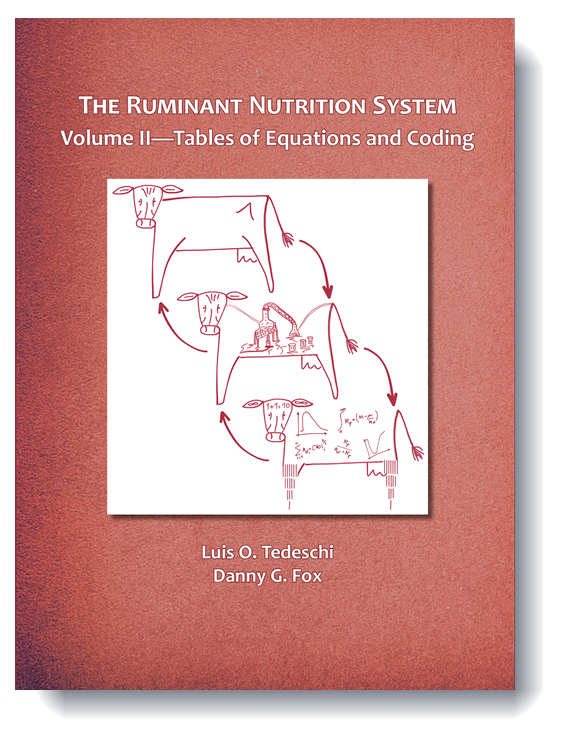
Since the publication of the second edition of The Ruminant Nutrition System: An Applied Model for Predicting Nutrient Requirements and Feed Utilization in Ruminants in January 2018, we have continued to receive encouraging feedback from readers around the world. We learned that The Ruminant Nutrition System book has been adopted as a textbook for advanced courses in ruminant nutrition and modeling. In the third edition, we have thoroughly revised the text, equations, and illustrations for correctness and clarity. Virtually every page had a modification. Sometimes we made a minor correction, but sometimes we rephrased a whole paragraph or updated an illustration. There are also a few new textual additions. We wrote new sentences to corroborate or supplement the text, highlight pertinent findings from recent research, and provide additional information and clarification while, as much as possible, maintaining intact the structure and pagination of the second edition. We changed the background color of all equations to improve their visibility within the text. We also revised and updated the references by reducing their font size and adding the digital object identifiers when available. There are 2,427 references in the Volume I (the "blue" book). Artificial intelligence, a data-intensive computational process, has received growing attention in the last decade, more specifically the machine learning and deep learning approaches. Because farms have been developing large databases, artificial intelligence has gained some traction in agriculture. The publicity around artificial intelligence promotes it as a solution for real-world problems, which may reduce the interest in mechanistic modeling. However, the integration of mathematical modeling and artificial intelligence is likely to spur an avant-garde technological wave in predictive analytics, resulting in a paradigm shift in the mathematical modeling domain. This shift will be so great that in the near future we will likely be using hybrid knowledge- and data-driven models. With this in mind, our goal is to make the information in The Ruminant Nutrition System book and the associated computer model ready for integration with artificial intelligence. Since we started writing the first edition of the Ruminant Nutrition System, we planned to include the computer model’s equations and the calculation logic. The book, however, quickly became a comprehensive document of the published research used to identify essential equations and variables for the underlying calculation logic of the RNS model. It was a rich, dense source of information about the biology and nutrition of ruminants and the mathematical modeling concepts behind the computer model. As a result, we scattered the RNS model equations throughout the book, within the appropriate chapters containing the pertinent scientific discussions, sometimes making it difficult for the reader to reconstruct the computer model. Soon after the publication of the first edition of the book, readers wishing to see the RNS model equations, their linkages, the calculation logic, and how they were implemented into the computer software started requesting more details. To meet this need, we needed to produce a companion book focused on describing the RNS model’s equations and code. Before releasing it to the public, however, we had to make sure that the equations accurately reflected the concepts (i.e., the validation step in mathematical modeling) delineated in the RNS’s Volume I. The RNS’s Volume II – Tables of Equations and Code (the "red" book) arose because of our commitment to document and disseminate the mathematics composing the RNS model clearly and in detail. Each part of Volume II presents the RNS model’s equations and the calculation logic in two ways. The first, more traditional approach lists the equations in a tabular form, including an equation number, the independent variable with its description, and a mathematical formulation (in the form of the equation) that follows a logical sequence for calculation and execution. The second approach embeds the equations into a modern, highly aggregated method of an actual computer programming language structure, the R script. This second approach presents the sequence and the calculation logic for the equations more systematically and coherently than the first approach for those wishing to understand how the RNS calculations were programmed.
The errata for Volumes I and II can be downloaded here. The latest versions of the RNS for R Scripts (*.ZZZ or *.ZZX files) can be downloaded from here.
Praises about the 2020 editions of The Ruminant Nutrition System books:
“The Blue Book. The Ruminant Nutrition System describes a nutrition model in form of a computer program predicting nutrient requirements important for food producing farm animals. In response to the growing importance of artificial intelligence for agricultural purposes Luis O. Tedeschi and Danny G. Fox revised and expanded the earlier versions of their Ruminant Nutrition System. The third and enhanced edition comprises two volumes. Volume 1, the “Blue Book” includes An Applied Model for Predicting Nutrient Requirements and Feed Utilization in Ruminants (RNS). Volume 2, the “Red Book” contains The Tables of Equations and Coding (RNS TEC). The Blue Book discusses the utility of nutrient models, their historical perspectives and the contemporary prospects. Main focusses are on modelling the dietary supply and animal requirements of energy and nutrients. Finally, the development of feed libraries is presented. Recent scientific developments and pivotal discoveries were incorporated and improve the readers´ overall understanding of the Ruminant Nutrition System as a whole. The updated Ruminant Nutrition System is an excellent advancement of its precursors. The books will serve as a highly relevant tool for teaching and research and will usefully support graduate students and scientists interested and active in ruminant nutrition, health and/or physiology.
The Red Book. The Ruminant Nutrition System describes a nutrition model in form of a computer program predicting nutrient requirements important for food producing farm animals. In response to the growing importance of artificial intelligence for agricultural purposes Luis O. Tedeschi and Danny G. Fox revised and expanded the earlier versions of their Ruminant Nutrition System. The third and enhanced edition comprises two volumes. Volume 1, the “Blue Book” includes An Applied Model for Predicting Nutrient Requirements and Feed Utilization in Ruminants (RNS). Volume 2, the “Red Book” contains The Tables of Equations and Coding (RNS TEC). In the new supplementary Red Book, the RNS model´s equations and the calculation logic are presented not only in the traditional tabular shape but also in the more modern form of their R scripts. The combination of both enables the targeted audience to understand the sophisticated approach of the RNS more profoundly and comprehensively. The updated Ruminant Nutrition System is an excellent advancement of its precursors. The books will serve as a highly relevant tool for teaching and research and will usefully support graduate students and scientists interested and active in ruminant nutrition, health and/or physiology.”
The complete book review is here.
Praises about previous editions of The Ruminant Nutrition System books:
Pekka Huhtanen, Professor; Swedish University Agriculture Science, Sweden. November 2016:
“…it is an impressive work and very useful for student and also for more experienced scientists. I hope to have sometimes time to read it thoroughly and extracts ideas for improving Karoline model… Congratulations of such impressive work.”
Antonello Cannas, Professor; University of Sassari, Italy. January 2017:
“… this book is a great achievement and is definitely the most advanced available on nutritional modeling and feeding systems. It is much more complete than the sum of the various NRC books and it provides a lot of new and integrated information. What I liked a lot is your ability in explaining all the biology behind the phenomena, and linking it to the many mathematical models described and their development over time. The introductory historical part is also unique, I am not aware of any other similar description of the integrated history of nutritional models. All this will be extremely valuable for many categories of scientists and professionals: researcher specialized in the area of nutritional modelling, researchers in ruminant nutrition with focus on other areas, Master and PhD students, whom will find a lot of knowledge, documentation and inspiration to develop their own research, professional that want to understand what they do.”
Max D. Garrison, DVM, CEO; Performance Cattle Company, LLC, Amarillo. March 2017:
“Congratulations on a task very well done. I have cracked open your new book and only wish I could go on vacation from my day job for a few years to digest all of the scientific knowledge you have poured into it… I know and have an appreciation for all the hard work the both of you plus others within your teams have done thru the years and to get it documented and made available for others to use and learn from has to be very fulfilling and rewarding. Job very well done… I did a quick analysis of approximately how many cattle we have sorted with your models thru the years starting in 1994… It would be safe to say over 10 million head sorted with various versions of the Cornell Value Discovery System (CVDS) under our multiple packaged processes… That is a fair sum of money your base scientific technology has put in our clients pockets thru the last 24 years… I know many other business entities are using your work in various production systems. You and your associates have had a huge positive impact on the efficiency of production within the cattle industry… We (PCC, PCC clients, and our business partners) have identified numerous research and development projects we plan to develop with your models being a key element of technology packaged processes for commercial cattle operations. We plan for the processes to be simple to implement, run at the speed of commerce, improve production efficiency, produce high quality beef and add more profitability to the enterprise. (My simple definition of Sustainability)”
Michael C. Barry, CEO; AgModels LLC, Tully, NY. April 2017:
“This book provides an excellent reference to the structure, philosophy and history behind the original Cornell Net Carbohydrate and Protein System project and its further evolution and expansion into the Ruminant Nutrition System. This effort successfully integrated knowledge from a wide variety of distinguished scientists and disciplines into a cohesive framework around which animal scientists can extend their understanding and apply the embedded concepts to real world situations. The significance of that achievement cannot be overstated, and in my humble opinion, this work describes the agricultural equivalent of the Manhattan project. While the mathematics in some sections may not be for the faint of heart, this book represents a comprehensive ‘state of the art’ of our current understanding of ruminant nutrition in very fine detail. Even the most seasoned of animal scientists will not be able to get through this book in one pass, not so much due to difficulty, but because it serves to stimulate the generation of new ideas to move the science forward in such a positive way.”
Peter J. Van Soest, Professor Emeritus; Cornell University, Ithaca, NY. September 2017:
"Drs. Tedeschi and Fox have “broadened the Cornell model and integrated it with related fields of biology, a nutritional system with wide application in the nutritional sciences.”
Gerhard Flachowsky, Professor; Federal Research Institute for Animal Health, Braunschweig, Germany; September 2017:
“The Ruminant Nutrition System is an exceedingly worthwhile tool for all scientists interested in physiology and nutrition of ruminants. It is highly recommendable for teaching and research of graduate students at the master and PhD levels in animal sciences, but also in life sciences, wildlife and fisheries sciences, ecosystem sciences and management, veterinary medicine as well as biology and zoology. Moreover, the book will also be valuable to practicing nutritionists who are looking for advanced information on applied ruminant nutrition and wish to understand biological and nutritional modelling of nutrient requirements by ruminants and nutrients supplied by feedstuffs undergoing ruminal fermentation, postruminal digestion, and nutrient absorption.”
| About the Authors | |

|
Luis Tedeschi is a professor in the Department of Animal Science at Texas A&M University. He received his Bachelor of Science degree in Agronomy Engineering and Master of Science degree in Animal and Forage Sciences from the University of São Paulo (Piracicaba, Brazil), and his Doctor of Philosophy degree in Animal Science from Cornell University (Ithaca, NY). His research focuses on the integration of accumulated scientific knowledge of ruminant nutrition into mathematical models to solve contemporary problems. The nutrition models he has developed are being used to develop more efficient production systems while reducing resource use and impact on the environment. He has published more than 250 articles in peer-reviewed journals and book chapters and presented at more than 80 modeling nutrition conferences and workshops worldwide. Tedeschi is a Texas A&M AgriLife Research Faculty Fellow and recipient of the 2011 Sir Frederick McMaster Fellowship and the 2013 J. William Fulbright Scholarship. He received the 2017 American Feed Industry Association in Ruminant Nutrition Research Award and the 2019 Texas A&M University Chancellor EDGES Fellowships. He served on the committee of the 2016 Nutrient Requirement of Beef Cattle by the National Academies of Sciences, Engineering, and Medicine. |

|
Danny Fox is a professor emeritus of the Department of Animal Science at Cornell University. He received his Bachelor of Science, Master of Science, and Doctor of Philosophy degrees from The Ohio State University. His 35 years of research focused on the development of data, methods, models, and computer programs to accurately predict cattle nutrient requirements, as well as nutrients derived from feeds to meet cattle requirements in unique production situations worldwide. His team at Cornell developed the Cornell Net Carbohydrate and Protein System cattle nutrition model and software, which has users in more than 42 countries, for formulating rations for beef and dairy cattle. Fox has been a member of numerous national committees, including National Research Council committees on Animal Nutrition, Feed Intake, and the 1996 Nutrient Requirements of Beef Cattle. His growth and energy reserves models were adapted by both the 1996 Beef Cattle National Research Council committee and the 2001 Dairy Cattle National Research Council committee. Fox received numerous awards during his 35-year career. In 2019, he was inducted into The Ohio State University Animal Sciences Hall of Fame and received the Plains Nutrition Council Legends of Feedlot Nutrition Award. |
The table of contents of the third edition of Volume I is here and Volume II is here.

Rumen Health Compendium (RHC) Book
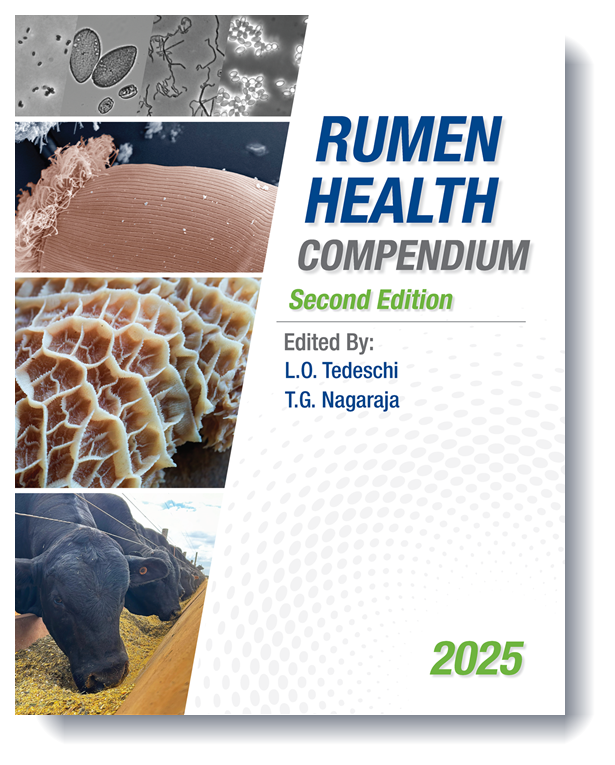
The Second Edition of the Rumen Health Compendium, edited by Dr. Luis O. Tedeschi and Dr. T. G. Nagaraja, presents a comprehensive and thoroughly updated perspective on rumen function and its central role in ruminant production. Since the release of the First Edition, the field has experienced substantial scientific and technological advances that have transformed our understanding of rumen health, microbial ecology, and host–microbe interactions. This edition reflects those advances and highlights the remarkable biological efficiency of ruminants as living biomachines capable of converting human-inedible fibrous materials into high-quality animal products. At the core of this process lies the rumen—a complex, symbiotic ecosystem whose evolutionary refinement over millions of years remains fundamental to both agriculture and ecology. You can get the latest books as hardcover or paperback editions from Kendall-Hunt.
This Second Edition comprises 26 chapters, 149 illustrations, and 1,717 references and expands the scope of the original work to address both foundational principles and emerging challenges in rumen health and management. It begins by extending the discussion from the anatomy and physiology of the rumen to the entire gastrointestinal tract, offering a holistic view of digestive function. The structure and function of the rumen microbial ecosystem are explored in depth through dedicated coverage of rumen microbiology and fermentation processes, providing readers with a clear understanding of the microbial dynamics that drive nutrient utilization and animal performance.
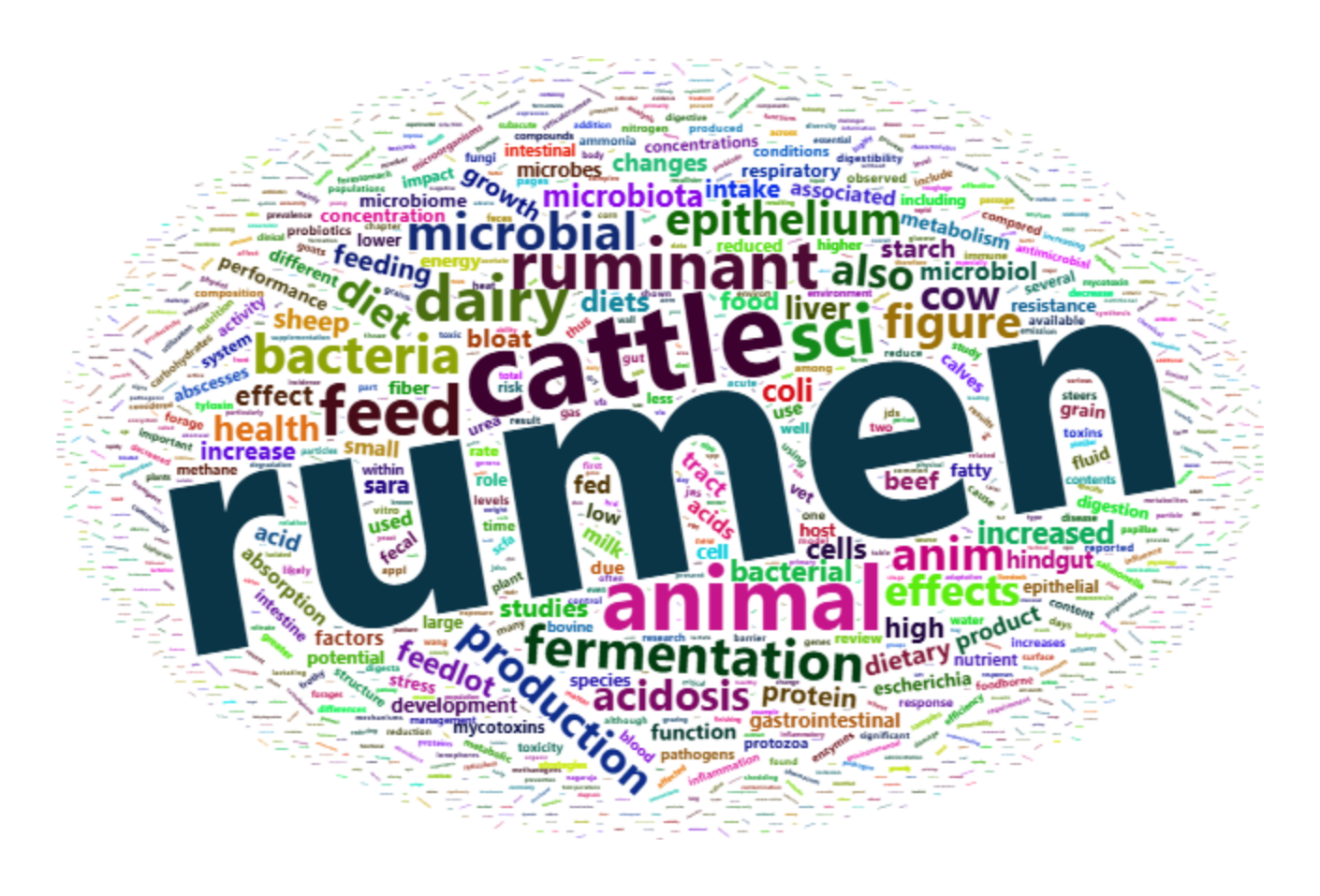
The Compendium then moves into contemporary issues in rumen and host health, emphasizing nutritional strategies designed to optimize rumen function and animal productivity. It examines modern rumen modifiers, the structure and biological function of the rumen epithelium, and the causes and consequences of subacute and acute ruminal acidosis in both beef and dairy cattle. The impacts of these conditions on the rumen microbiome are discussed alongside broader digestive and metabolic disorders that compromise rumen efficiency. Liver abscesses, bloat and its microbial interactions, the unique challenges faced in small ruminant production, leaky gut syndrome, hindgut health, and the emerging links between rumen health and lung function are each addressed with practical and biological depth. The Second Edition also includes a dedicated section on major toxicities affecting rumen function, including plant, microbial, and urea toxicoses, with clear cause-and-effect relationships linking exposure to ruminal dysfunction. Diagnostic approaches for rumen disorders are presented through detailed discussions of ruminal fluid analysis and fecal examination, offering practical tools for both research and field application.
Newly expanded chapters place rumen health within a broader societal and environmental context, addressing climate stress, methane emissions, food safety, and antimicrobial resistance. These additions emphasize the growing importance of rumen health in discussions of sustainability, environmental stewardship, and ethical ruminant production systems. Authored by leading experts across disciplines under the editorial leadership of Dr. Tedeschi and Dr. Nagaraja, the Second Edition of the Rumen Health Compendium provides a multidisciplinary, authoritative reference for students, researchers, veterinarians, nutritionists, and industry professionals. It is intended not only as a source of foundational knowledge but also as a guide for innovation in rumen health management. We extend sincere gratitude to the contributors, reviewers, and readers whose efforts shaped this volume, and we welcome feedback to guide future editions. It is our hope that this Compendium will continue to inspire discovery and support a healthier, more sustainable future for ruminant production.
| About the Authors | |
|
|
Luis Tedeschi is a professor in the Department of Animal Science at Texas A&M University. He received his Bachelor of Science degree in Agronomy Engineering and Master of Science degree in Animal and Forage Sciences from the University of São Paulo (Piracicaba, Brazil), and his Doctor of Philosophy degree in Animal Science from Cornell University (Ithaca, NY). His research focuses on the integration of accumulated scientific knowledge of ruminant nutrition into mathematical models to solve contemporary problems. The nutrition models he has developed are being used to develop more efficient production systems while reducing resource use and impact on the environment. He has published more than 250 articles in peer-reviewed journals and book chapters and presented at more than 80 modeling nutrition conferences and workshops worldwide. Tedeschi is a Texas A&M AgriLife Research Faculty Fellow and recipient of the 2011 Sir Frederick McMaster Fellowship and the 2013 J. William Fulbright Scholarship. He received the 2017 American Feed Industry Association in Ruminant Nutrition Research Award and the 2019 Texas A&M University Chancellor EDGES Fellowships. He served on the committee of the 2016 Nutrient Requirement of Beef Cattle by the National Academies of Sciences, Engineering, and Medicine. |

|
T. G. Nagaraja is a University Distinguished Professor of Microbiology and Dr. Roy Walter Upham Endowed Professor in the Department of Diagnostic Medicine/Pathobiology in the College of Veterinary Medicine at Kansas State University. His research expertise is in gut microbiology of cattle, particularly of beef cattle. His research program, a blend of basic and applied research, has focused primarily on the role of ruminal microbes in function and dysfunctions of the rumen of cattle, and on food borne pathogens, particularly Shiga toxin-producing Escherichia coli and Salmonella in cattle. Specifically, the contributions that he and his associates have made are in the following areas: antibiotics, particularly ionophores, and ruminal fermentation modifications; etiology and pathogenesis of and vaccine development for liver abscesses; causes and preventions of ruminal acidosis and bloat; ecology of Shiga toxin-producing E. coli and Salmonella in cattle; and antimicrobial resistance and antimicrobial alternatives in cattle production systems.; He has mentored 22 PhD, 23 MS, and 4 MPH students and several post docs and visiting scientists. His research has resulted in eight US patents. Nagaraja and his associates have published several book chapters (30), review papers (16), and symposia proceedings (5) and peer-reviewed journal papers (270). His teaching responsibilities include Veterinary Bacteriology and Mycology course for the DVM students, Ruminant Digestive Physiology for the DVM students, two graduate courses on the rumen, Rumen Metabolism and Rumen Microbiology |
The table of contents of the second edition is here.
Ruminant Nutrition Papers
1981 to 1990
-
Fox, D. G., C. J. Sniffen, and J. D. O'Connor. 1988. Adjusting nutrient requirements of beef cattle for animal and environmental variations. J. Anim. Sci. 66:1475-1495.
1991 to 2000
-
Fox, D. G., C. J. Sniffen, J. D. O'Connor, J. B. Russell, and P. J. Van Soest. 1992. A net carbohydrate and protein system for evaluating cattle diets: III. Cattle requirements and diet adequacy. J. Anim. Sci. 70:3578-3596.
-
Russell, J. B., J. D. O'Connor, D. G. Fox, P. J. Van Soest, and C. J. Sniffen. 1992. A net carbohydrate and protein system for evaluating cattle diets: I. Ruminal fermentation. J. Anim. Sci. 70:3551-3561.
-
Sniffen, C. J., J. D. O'Connor, P. J. Van Soest, D. G. Fox, and J. B. Russell. 1992. A net carbohydrate and protein system for evaluating cattle diets: II. Carbohydrate and protein availability. J. Anim. Sci. 70:3562-3577.
-
Ainslie, S. J., D. G. Fox, T. C. Perry, D. J. Ketchen, and M. C. Barry. 1993. Predicting amino acid adequacy of diets fed to Holstein steers. J. Anim. Sci. 71(5):1312-1319.
-
O'Connor, J. D., C. J. Sniffen, D. G. Fox, and W. Chalupa. 1993. A net carbohydrate and protein system for evaluating cattle diets: IV. Predicting amino acid adequacy. J. Anim. Sci. 71:1298-1311.
-
Pitt, R. E., J. S. Van Kessel, D. G. Fox, A. N. Pell, M. C. Barry, and P. J. Van Soest. 1996. Prediction of ruminal volatile fatty acids and pH within the net carbohydrate and protein system. J. Anim. Sci. 74(1):226-244.
-
Van Kessel, J. S. and J. B. Russell. 1996. The effect of amino nitrogen on the energetics of ruminal bacteria and its impact on energy spilling. J. Dairy Sci. 79:1237-1243.
-
Lana, R. P., D. G. Fox, J. B. Russell, and T. C. Perry. 1997. Influence of monensin on Holstein steers fed high-concentrate diets containing soybean meal or urea. J. Anim. Sci. 75(10):2571-2579.
-
Mertens, D. R. 1997. Creating a system for meeting the fiber requirements of dairy cows. J. Dairy Sci. 80(7):1463-1481.
-
Pitt, R. E. and A. N. Pell. 1997. Modeling ruminal pH fluctuations: interactions between meal frequency and digestion rate. J. Dairy Sci. 80(10):2429-2441.
-
Roseler, D. K., D. G. Fox, L. E. Chase, A. N. Pell, and W. C. Stone. 1997. Development and evaluation of equations for prediction of feed intake for lactating Holstein dairy cows. J. Dairy Sci. 80(5):878-893.
-
Fox, D. G. and T. P. Tylutki. 1998. Accounting for the effects of environment on the nutrient requirements of dairy cattle. J. Dairy Sci. 81(11):3085-3095.
-
Fox, D. G., M. E. Van Amburgh, and T. P. Tylutki. 1999. Predicting requirements for growth, maturity, and body reserves in dairy cattle. J. Dairy Sci. 82(9):1968-1977.
-
Tedeschi, L. O., D. G. Fox, L. E. Chase, and S. J. Wang. 2000a. Whole-herd optimization with the Cornell net carbohydrate and protein system. I. Predicting feed biological values for diet optimization with linear programming. J. Dairy Sci. 83:2139-2148.
-
Tedeschi, L. O., D. G. Fox, and J. B. Russell. 2000b. Accounting for the effects of a ruminal nitrogen deficiency within the structure of the Cornell net carbohydrate and protein system. J. Anim. Sci. 78:1648-1658.
-
Tedeschi, L. O., D. G. Fox, and J. B. Russell. 2000c. Accounting for ruminal deficiencies of nitrogen and branched-chain amino acids in the structure of the Cornell net carbohydrate and protein system. Proceedings of Cornell Nutrition Conference for Feed Manufacturers, Rochester, NY:224-238.
2001 to 2010
-
Ruiz, R., G. L. Albrecht, L. O. Tedeschi, G. Jarvis, J. B. Russell, and D. G. Fox. 2001. Effect of monensin on the performance and nitrogen utilization of lactating dairy cows consuming fresh forage. J. Dairy Sci. 84:1717-1727.
-
Tedeschi, L. O., A. N. Pell, D. G. Fox, and C. R. Llames. 2001. The amino acid profiles of the whole plant and of four residues from temperate and tropical forages. J. Anim. Sci. 79:525-532.
-
Mertens, D. R. 2002. Measuring fiber and its effectiveness in ruminant diets. in Proc. Plains nutrition conference, San Antonio, TX.
-
Muscato, T. V., L. O. Tedeschi, and J. B. Russell. 2002. The effect of ruminal fluid preparations on the growth and health of new-born, milk-fed dairy calves. J. Dairy Sci. 85:648-656.
-
Tedeschi, L. O., C. Boin, D. G. Fox, P. R. Leme, G. F. Alleoni, and D. P. D. Lanna. 2002a. Energy requirement for maintenance and growth of Nellore bulls and steers fed high-forage diets. J. Anim. Sci. 80:1671-1682.
-
Fox, D. G. and L. O. Tedeschi. 2003. Predicting dietary amino acid adequacy for ruminants. Pages 389-410 in Amino Acids in Animal Nutrition. J. P. F. D'Mello, ed. CABI Publishing, Cambridge, MA.
-
Cannas, A., L. O. Tedeschi, D. G. Fox, A. N. Pell, and P. J. Van Soest. 2004. A mechanistic model for predicting the nutrient requirements and feed biological values for sheep. J. Anim Sci. 82(1):149-169.
-
Fox, D. G., L. O. Tedeschi, T. P. Tylutki, J. B. Russell, M. E. Van Amburgh, L. E. Chase, A. N. Pell, and T. R. Overton. 2004. The Cornell Net Carbohydrate and Protein System model for evaluating herd nutrition and nutrient excretion. Anim. Feed Sci. Technol. 112(1-4):29-78.
-
Cannas, A., L. O. Tedeschi, A. S. Atzori, and D. G. Fox. 2006. Prediction of energy requirements for growing sheep with the Cornell Net Carbohydrate and Protein System. Pages 99-113 in Modeling Nutrient Utilization in Farm Animals. J. Dijkstra, ed. CABI Publishing, Cambridge, MA.
-
Tedeschi, L. O., S. Seo, D. G. Fox, and R. Ruiz. 2006. Accounting for energy and protein reserve changes in predicting diet-allowable milk production in cattle. J. Dairy Sci. 89:4795-4807.
-
Chizzotti, M. L., S. C. Valadares Filho, L. O. Tedeschi, F. H. M. Chizzotti, and G. E. Carstens. 2007. Energy and protein requirements for growth and maintenance of F1 Nellore x Red Angus bulls, steers, and heifers. Journal of Animal Science. 85:1971-1981.
-
Fernandes, M. H. M. R., K. T. Resende, L. O. Tedeschi, J. S. Fernandes, Jr., H. M. Silva, G. E. Carstens, T. T. Berchielli, I. A. M. A. Teixeira, and L. Akinaga. 2007. Energy and protein requirements for maintenance and growth of Boer crossbred kids. J. Anim. Sci. 85:1014-1023.
-
Seo, S., C. Lanzas, L. O. Tedeschi, and D. G. Fox. 2007. Development of a mechanistic model to represent the dynamics of liquid flow out of the rumen and to predict rate of passage of liquid in dairy cattle. J. Dairy Sci. 90:840-855.
-
Tedeschi, L. O., D. G. Fox, and J. B. Russell. 2007. Development of mathematical models to estimate animal performance and feed biological values. Pages 223-252 in International Symposium of Advances in Research Techniques for Ruminant Nutrition, 1, Pirassununga, SP, Brazil. Studium 5D Marketing e Comunicação.
-
Vieira, R. A. M., L. O. Tedeschi, and A. Cannas. 2007a. A generalized model for describing fiber dynamics in the ruminant gastrointestinal tract. 1. The heterogeneity of the pool of fiber particles in the ruminoreticulum. 2007 Beef Cattle Report in Texas. Texas A&M University, College Station, TX. 97-102 p.
-
Vieira, R. A. M., L. O. Tedeschi, and A. Cannas. 2007b. A generalized model for describing fiber dynamics in the ruminant gastrointestinal tract. 2. Accounting for heterogeneous pools in the ruminoreticulum. 2007 Beef Cattle Report in Texas. Texas A&M University, College Station, TX. 103-110 p.
-
Vieira, R. A. M., L. O. Tedeschi, and A. Cannas. 2007c. A generalized model for describing fiber dynamics in the ruminant gastrointestinal tract. 3. Estimating digestion-related kinetic parameters. 2007 Beef Cattle Report in Texas. Texas A&M University, College Station, TX. 111-120 p.
-
Chizzotti, F. H. M., O. G. Pereira, L. O. Tedeschi, S. C. Valadares Filho, M. L. Chizzotti, M. I. Leão, and D. H. Pereira. 2008. Effects of dietary nonprotein nitrogen on performance, digestibility, ruminal characteristics, and microbial efficiency in crossbred steers. Journal of Animal Science. 86:1173-1181.
-
Fernandes, M. H. M. R., K. T. Resende, L. O. Tedeschi, J. S. Fernandes, Jr., I. A. M. A. Teixeira, G. E. Carstens, and T. T. Berchielli. 2008. Predicting the chemical composition of the body and the carcass of 3/4 Boer x 1/4Saanen kids using body components. Small Ruminant Research. 75:90-98.
-
Tylutki, T. P., D. G. Fox, V. M. Durbal, L. O. Tedeschi, J. B. Russell, M. E. Van Amburgh, T. R. Overton, L. E. Chase, and A. N. Pell. 2008. Cornell net carbohydrate and protein system; A model for precision feeding of dairy cattle. Anim. Feed Sci. Technol. 143:174-202.
-
Vieira, R.A.M., Tedeschi, L.O., Cannas, A., 2008. A generalized compartmental model to estimate the fibre mass in the ruminoreticulum. 1. Estimating parameters of digestion. Journal of Theoretical Biology (255) 345-356.
-
Vieira, R.A.M., Tedeschi, L.O., Cannas, A., 2008. A generalized compartmental model to estimate the fibre mass in the ruminoreticulum. 2. Integrating digestion and passage. Journal of Theoretical Biology (255) 357-368.
2011 to 2020
-
Aguiar, A. D., L. O. Tedeschi, F. M. Rouquette, Jr., K. C. McCuistion, J. A. Ortega-Santos, R. C. Anderson, D. DeLaney, and S. Moore. 2011. Determination of nutritive value of forages in south Texas using an in vitro gas production technique. Grass Forage Sci. 66 (4):526-540. doi: 10.1111/j.1365-2494.2011.00809.x
-
Tedeschi, L. O., D. G. Fox, M. A. Fonseca, and L. F. L. Cavalcanti. 2015. Invited Review: Models of protein and amino acid requirements for cattle. Rev. Bras. Zootec. 44(3):109-132.
Growth and Development Papers
1981 to 1990
-
Fox, D. G. and J. R. Black. 1984. A system for predicting body composition and performance of growing cattle. J. Anim. Sci. 58(3):725-739.
-
Abdalla, H. O., D. G. Fox, and M. L. Thonney. 1988. Compensatory gain by Holstein calves after under feeding protein. J. Anim. Sci. 66:2687-2695.
-
Rayburn, E. B. and D. G. Fox. 1990. Predicting growth and performance of Holstein steers. J. Anim. Sci. 68:788-798.
1991 to 2000
-
Perry, T. C., D. G. Fox, and D. H. Beermann. 1991. Effect of an implant of trenbolone acetate and estradiol on growth, feed efficiency, and carcass composition of Holstein and beef steers. J. Anim. Sci. 69:4696-4702.
-
Tylutki, T. P., D. G. Fox, and R. G. Anrique. 1994. Predicting net energy and protein requirements for growth of implanted and nonimplanted heifers and steers and nonimplanted bulls varying in body size. J. Anim. Sci. 72:1806-1813.
-
Perry, T. C. and D. G. Fox. 1997.Predicting carcass composition and individual feed requirement in live cattle widely varying in body size. J. Anim. Sci. 75:300-307.
2001 to 2010
-
Fox, D. G., L. O. Tedeschi, and P. J. Guiroy. 2001a. Determining feed intake and feed efficiency of individual cattle fed in groups. Pages 80-98 in Beef Improvement Federation, San Antonio, TX.
-
Fox, D. G., L. O. Tedeschi, and P. J. Guiroy. 2001b. A decision support system for individual cattle management. Pages 64-76 in Proc. Cornell Nutr. Conf. Feed Manuf., Rochester, NY. Cornell University, Ithaca, NY.
-
Fox, D. G., L. O. Tedeschi, and M. J. Baker. 2002a. Determining post-weaning efficiency of beef cattle. Pages 44-66 in Beef Improvement Federation, 34th, Omaha, NE.
-
Guiroy, P. J., L. O. Tedeschi, D. G. Fox, and J. P. Hutcheson. 2002. The effects of implant strategy on finished body weight of beef cattle. J. Anim. Sci. 80:1791-1800.
-
Tedeschi, L. O., D. G. Fox, and P. J. Guiroy. 2004a. A decision support system to improve individual cattle management. 1. A mechanistic, dynamic model for animal growth. Agric. Syst. 79:171-204. (Corrigendum)
-
Abdelsamei, A. H., D. G. Fox, L. O. Tedeschi, M. L. Thonney, D. J. Ketchen, and J. R. Stouffer. 2005. The effect of milk intake on forage intake and growth of nursing calves. J. Anim. Sci. 83:940-947.
-
Baker, M. J., L. O. Tedeschi, D. G. Fox, W. R. Henning, and D. J. Ketchen. 2006. Using ultrasound measurements to predict body composition of yearling bulls. J. Anim. Sci. 84:2666-2672.
-
Carstens, G. E. and L. O. Tedeschi. 2006. Defining feed efficiency in beef cattle. Pages 12-21 in Beef Improvement Federation, 38, Choctaw, Mississippi.
-
Tedeschi, L. O. and D. G. Fox. 2006. Using mathematical nutrition models to improve beef cattle efficiency. 2006 Beef Cattle Report in Texas. Texas A&M University, College Station, TX. 95-103 p.
-
Tedeschi, L. O., M. L. Chizzotti, D. G. Fox, and G. E. Carstens. 2006a. Using mathematical nutrition models to improve beef cattle efficiency. Pages 461-484 in International Symposium of Beef Production, V, Viçosa, MG, Brazil. Suprema Gráfica e Editora Ltda.
-
Tedeschi, L. O., D. G. Fox, M. J. Baker, and D. P. Kirschten. 2006b. Identifying differences in feed efficiency among group-fed cattle. J. Anim. Sci. 84:767-776.
-
Tedeschi, L. O., D. G. Fox, M. J. Baker, and K. Long. 2006c. A model to evaluate beef cow efficiency. Pages 84-98 in Nutrient Digestion and Utilization in Farm Animals: Modeling Approaches. E. Kebreab, J. Dijkstra, A. Bannink, W. J. J. Gerrits and J. France, ed. CABI Publishing, Cambridge, MA.
-
Vasconcelos, J. T., L. O. Tedeschi, J. E. Sawyer, and L. W. Greene. 2007. Application of mathematical models to individually allocate feed of group-fed cattle. Prof. Anim. Scient..23:340-348.
-
Chizzotti, M.L., Tedeschi, L.O., Valadares Filho, S.C. 2008. A meta-analysis of energy and protein requirements for maintenance and growth of Nellore cattle. J. Anim. Sci. 86:1588-1597.
-
Ribeiro, F. R. B., L. O. Tedeschi, J. R. Stouffer, and G. E. Carstens. 2008. Technical note: A novel technique to assess internal body fat of cattle by using real-time ultrasound. Journal of Animal Science. 86:763-737.
-
Rhoades, R. D., C. H. Ponce, S. B. Smith, A. D. Herring, L. O. Tedeschi, D. K. Lunt, D. T. Dean, F. R. B. Ribeiro, C. W. Choi, D. G. Riley, and J. E. Sawyer. 2009. Evaluation of growth-based predictions of carcass fat and marbling at slaughter using ultrasound measurements. Prof. Anim. Scient. 25 (4):434-442.
-
Marcondes, M. I., L. O. Tedeschi, S. C. Valadares Filho, and M. L. Chizzotti. 2012. Prediction of physical and chemical body compositions of purebred and crossbred Nellore cattle using the composition of a rib section. J. Anim. Sci. 90:1280-1290.
2011 to 2020
-
Bonilha, S. F. M., L. O. Tedeschi, I. U. Packer, A. G. Razook, R. F. Nardon, L. A. Figueiredo, and G. F. Alleoni. 2011. Chemical composition of whole body and carcass of Bos indicus and tropically adapted Bos taurus breeds. J. Anim. Sci. 89 (9):2859-2866. doi: 10.2527/jas.2010-3649.
-
Chay-Canul, A. J., A. J. Ayala-Burgos, J. C. Ku-Vera, J. G. Magaña-Monforte, and L. O. Tedeschi. 2011. The effects of metabolizable energy intake on body fat depots of adult Pelibuey ewes fed roughage diets under tropical conditions. Trop Anim Health Prod. 43 (5):929-936. doi: 10.1007/s11250-011-9785-5.
-
Ribeiro, F. R. B., L. O. Tedeschi, R. D. Rhoades, S. B. Smith, S. E. Martin, and S. F. Crouse. 2011. Evaluating the application of dual X-ray energy absorptiometry to assess dissectible and chemical fat and muscle from the 9th-to-11th rib section of beef cattle. Prof. Anim. Scient. 27:472-476.
Feedstuff Papers
1981 to 1990
-
Abdalla, H. O., D. G. Fox, and R. R. Seaney. 1988a. Variation in protein and fiber fractions in pasture during the grazing season. J. Anim. Sci. 66:2663-2667.
-
Abdalla, H. O., D. G. Fox, and R. R. Seaney. 1988b. Protein distribution in four cool-season grass varieties alone or in combination with trefoil. J. Anim. Sci. 66:2325-2329.
-
Abdalla, H. O., D. G. Fox, and P. J. Van Soest. 1988c. An evaluation of methods for preserving fresh forage samples before protein fraction determinations. J. Anim. Sci. 66:2646-2649.
1991 to 2000
-
Doane, P. H., A. N. Pell, and P. Schofield. 1997a. The effect of preservation method on the neutral detergent soluble fraction of forages. J. Anim. Sci. 75:1140-1148.
-
Doane, P. H., P. Schofield, and A. N. Pell. 1997b. Neutral detergent fiber disappearance and gas and volatile fatty acids production during the in vitro fermentation of six forages. J. Anim. Sci. 75:3342-3352.
-
Doane, P. H., A. N. Pell, and P. Schofield. 1998. Ensiling effects on the ethanol fractionation of forages using gas production. J. Anim. Sci. 76:888-895.
-
Traxler, M. J., D. G. Fox, P. J. Van Soest, A. N. Pell, C. E. Lascano, D. P. D. Lanna, J. E. Moore, R. P. Lana, M. Velez, and A. Flores. 1998. Predicting forage indigestible NDF from lignin concentration. J. Anim. Sci. 76:1469-1480.
-
Chen, Y. K., A. N. Pell, L. E. Chase, and P. Schofield. 1999. Rate and extent of digestion of the ethanol-soluble and neutral detergent-insoluble fractions of corn grain. J. Anim. Sci. 77:3077-3083.
-
Juarez-Lagunes, F. I., D. G. Fox, R. W. Blake, and A. N. Pell. 1999. Evaluation of tropical grasses for milk production by dual-purpose cows in tropical Mexico. J. Dairy Sci. 82(10):2136-2145.
-
Van Soest, P. J., M. E. Van Amburgh, and L. O. Tedeschi. 2000. Rumen balance and rates of fiber digestion. Proceedings of Cornell Nutrition Conference for Feed Manufacturers, Rochester, NY:150-166.
2001 to 2010
-
Tedeschi, L. O., D. G. Fox, A. N. Pell, D. P. D. Lanna, and C. Boin. 2002b. Development and evaluation of a tropical feed library for the Cornell Net Carbohydrate and Protein System model. Scientia Agricola. 59:1-18.
-
Tedeschi, L. O., D. G. Fox, and P. H. Doane. 2005a. Evaluation of the tabular feed energy and protein undegradability values of the National Research Council nutrient requirements of beef cattle. Prof. Anim. Scient.. 21:403-415.
-
Seo, S., L. O. Tedeschi, C. G. Schwab, and D. G. Fox. 2006a. Development and evaluation of empirical equations to predict feed passage rate in cattle. Anim. Feed Sci. Technol. 128:67-83.
-
Seo, S., L. O. Tedeschi, C. G. Schwab, and D. G. Fox. 2006b. Evaluation of the passage rate equations in the 2001 Dairy NRC Model. J. Dairy Sci. 89:2327-2342.
-
Lanzas, C., D. G. Fox, and A. N. Pell. 2007a. Digestion kinetics of dried cereal grains. Anim. Feed Sci. Technol. 136:265-280.
-
Lanzas, C., C. J. Sniffen, S. Seo, L. O. Tedeschi, and D. G. Fox. 2007b. A revised CNCPS feed carbohydrate fractionation scheme for formulating rations for ruminants. Anim. Feed Sci. Technol. 136:167-190.
-
Lanzas, C., L. O. Tedeschi, S. Seo, and D. G. Fox. 2007c. Evaluation of protein fractionation systems used in formulating rations for dairy cattle. J. Dairy Sci. 90:507-521.
Environment and Nutrient Management Papers
1991 to 2000
-
Bannon, C. D. and S. D. Klausner. 1997. Application of the Cornell Nutrient Management Planning System: Predicting crop requirements and optimum manure management. Proc. Cornell Nutr. Conf. Feed Manuf., Rochester, NY:36-44.
-
Kilcer, T. F. 1997. Application of the Cornell Nutrient Management Planning System: Optimizing crop rotations. Proc. Cornell Nutr. Conf. Feed Manuf., Rochester, NY:45-53.
-
Tylutki, T. P. and D. G. Fox. 1997. Application of the Cornell Nutrient Management Planning System: Optimizing herd nutrition. Proceedings of Cornell Nutrition Conference for Feed Manufacturers, Rochester, NY:54-65.
-
Hutson, J. L., R. E. Pitt, R. K. Koelsch, J. B. Houser, and R. J. Wagenet. 1998. Improving dairy farm sustainability II: Environmental losses and nutrient flows. J Prod Agric. 11(2):233-239.
-
Klausner, S. D., D. G. Fox, C. N. Rasmussen, R. E. Pitt, T. P. Tylutki, P. E. Wright, L. E. Chase, and W. C. Stone. 1998. Improving dairy farm sustainability I: An approach to animal and crop nutrient management planning. J Prod Agric. 11(2):225-233.
-
Wang, S.-J., D. G. Fox, D. J. R. Cherney, S. D. Klausner, and D. R. Bouldin. 1999. Impact of dairy farming on well water nitrate level and soil content of phosphorus and potassium. J. Dairy Sci. 82:2164-2169.
-
Tylutki, T. P. and D. G. Fox. 2000. Managing the dairy feeding system to minimize manure nutrients. Northeast Agricultural Engineering Service, Bulletin 130. NRAES, Ithaca, NY. p. 1-16.
-
Wang, S.-J., D. G. Fox, D. J. R. Cherney, L. E. Chase, and L. O. Tedeschi. 2000a. Whole herd optimization with the Cornell net carbohydrate and protein system. II. Allocating home grown feeds across the herd for optimum nutrient use. J. of Dairy Sci. 83:2149-2159.
-
Wang, S.-J., D. G. Fox, D. J. R. Cherney, L. E. Chase, and L. O. Tedeschi. 2000b. Whole herd optimization with the Cornell net carbohydrate and protein system. III. Application of an optimization model to evaluate alternatives to reduce nitrogen and phosphorus mass balance. J. of Dairy Sci. 83:2160-2169.
2001 to 2010
-
Fox, D. G., T. P. Tylutki, G. L. Albrecht, P. E. Cerosaletti, and L. O. Tedeschi. 2002b. Environmental protection and the Cornell University nutrient management planning system: Future perspectives. Proc. of Cornell Nutr. Conf. Feed Manuf., Syracuse, NY:79-98.
-
Tylutki, T. P., D. G. Fox, and M. Mcmahon. 2002. Implementation of the cuNMPS: development and implementation of alternatives. Pages 57-70 in Proc. Cornell Nutr. Conf. Feed Manuf., Syracuse, NY. Cornell University, Ithaca, NY.
-
Tylutki, T. P., D. G. Fox, and M. Mcmahon. 2004. Implementation of nutrient management planning on a dairy farm. Prof. Anim. Scient.. 20:58-65.
-
Fox, D. G., T. P. Tylutki, L. O. Tedeschi, and P. E. Cerosaletti. 2006. Using a nutrition model to implement the NRCS feed management standard to reduce the environmental impact of a concentrated cattle feeding operation. Page 15 p. in Visions for Animal Agriculture and the Environment, Kansas City, MO. Department of Animal Science at Iowa State University.
-
Vasconcelos, J. T., L. W. Greene, N. A. Cole, M. S. Brown, F. T. McCollum III, and L. O. Tedeschi. 2006. Effects of phase feeding of protein on performance, blood urea nitrogen concentration, manure nitrogen:phosphorus ratio, and carcass characteristics of feedlot cattle. J. Anim. Sci. 84:3032-3038.
-
Vasconcelos, J. T., L. O. Tedeschi, D. G. Fox, M. L. Galyean, and L. W. Greene. 2007. Review: Feeding nitrogen and phosphorus in beef cattle feedlot production to mitigate environmental impacts. Prof. Anim. Scient.. 23:8-17.
Modeling and Simulation Papers
2000 to 2010
-
Guimarães, V. P., L. O. Tedeschi, and M. T. Rodrigues. 2009. Development of a mathematical model to study the impacts of production and management policies on the herd dynamics and profitability of dairy goats. Ag. Syst. 101:186-196.
-
Tedeschi, L. O., A. Cannas, and D. G. Fox. 2010. A nutrition mathematical model to account for dietary supply and requirements of energy and nutrients for domesticated small ruminants: The development and evaluation of the Small Ruminant Nutrition System. Small Ruminant Res. 89:174-184.
2011 to 2020
-
Tedeschi, L. O., C. F. Nicholson, and E. Rich. 2011. Using System Dynamics modelling approach to develop management tools for animal production with emphasis on small ruminants. Small Ruminant Res. 98:102-110.
-
Parsons, D., C. F. Nicholson, R. W. Blake, Q. M. Ketterings, L. Ramírez-Avilés, D. G. Fox, L. O. Tedeschi, and J. H. Cherney. 2011. Development and evaluation of an integrated simulation model for assessing smallholder crop-livestock production in Yucatán, Mexico. Ag. Syst. 104:1-12.
-
Turner, B. L., R. D. Rhoades, L. O. Tedeschi, R. D. Hanagriff, K. C. McCuistion, and B. H. Dunn. 2013. Analyzing ranch profitability from varying cow sales and heifer replacement rates for beef cow-calf production using system dynamics. Ag. Syst. 114:6-14.
-
Tedeschi, L. O., D. G. Fox, and P. J. Kononoff. 2013. A dynamic model to predict fat and protein fluxes associated with body reserve changes in cattle. J. Dairy Sci. 96(4):2448-2463.
-
Tedeschi, L. O., C. A. Ramirez-Restrepo, and J. P. Muir. 2014. Developing a conceptual model of possible benefits of condensed tannins for ruminant production. Animal. 8(7):1095-1105.
Application of Mathematical Nutrition Model Papers
1991 to 2000
-
Roseler, D. K. 1991. The use of nutrition models in the commercial feed industry. Proc Cornell Nutr Conf Feed Manuf, Rochester, NY:66-72.
-
Stone, W. C., L. E. Chase, and D. G. Fox. 1992. System model in a progressive dairy herd. Proc Cornell Nutr Conf Feed Manuf, Rochester, NY:168-179.
-
Nicholson, C. F., R. W. Blake, C. I. Urbina, D. R. Lee, D. G. Fox, and P. J. Van Soest. 1994a. Economic comparison of nutritional management strategies for Venezuelan dual-purpose cattle systems. J. Anim. Sci. 72:1680-1696.
-
Nicholson, C. F., D. R. Lee, R. N. Boisvert, R. W. Blake, and C. I. Urbina. 1994b. An optimization model of the dual-purpose cattle production system in the humid lowlands of Venezuela. Agric. Sys. 46:311-334.
-
Fox, D. G., M. C. Barry, R. E. Pitt, D. K. Roseler, and W. C. Stone. 1995. Application of the Cornell net carbohydrate and protein model for cattle consuming forage. J. Anim. Sci. 73:267-277.
-
Cerosaletti, P. E., D. G. Fox, L. E. Chase, A. N. Pell, and W. A. Knoblauch. 1998. Application of the Cornell net carbohydrate and protein system on a pasture-based dairy farm. Proc Cornell Nutr Conf Feed Manuf, Rochester, NY:197-211.
-
Lanna, D. P. D., L. O. Tedeschi, and J. A. Beltrame Filho. 1999. Modelos lineares e não-lineares de uso de nutrientes para formulação de dietas de ruminantes. Scientia Agricola. 56:479-488.
2001 to 2010
-
Fox, D. G. and L. O. Tedeschi. 2002. Application of physically effective fiber in diets for feedlot cattle. Pages 67-81 in Proc. Plains nutrition conference, San Antonio, TX.
-
Rueda-Maldonato, B. L., R. W. Blake, C. F. Nicholson, D. G. Fox, L. O. Tedeschi, A. N. Pell, E. C. M. Fernandes, J. F. Valentim, and J. C. Carneiro. 2003. Production and economic potentials of cattle in pasture-based systems of the western Amazon region of Brazil. J. Anim Sci. 81(12):2923-2937.
-
Tedeschi, L. O., D. G. Fox, and T. P. Tylutki. 2003. Potential environmental benefits of ionophores in ruminant diets. J. Environ. Qual. 32:1591-1602.
-
Cerosaletti, P. E., D. G. Fox, and L. E. Chase. 2004. Phosphorus reduction through precision feeding of dairy cattle. J. Dairy Sci. 87:2314-2323.
-
Lana, R. P., R. H. T. B. Goes, L. M. Moreira, A. B. Mâncio, D. M. Fonseca, and L. O. Tedeschi. 2005. Application of Lineweaver-Burk data transformation to explain animal and plant performance as a function of nutrient supply. Livest. Prod. Sci. 98:219-224.
-
Parsons, D., C. F. Nicholson, R. W. Blake, Q. M. Ketterings, L. Ramírez-Avilés, J. H. Cherney, and D. G. Fox. 2010. Application of a simulation model for assessing integration of smallholder shifting cultivation and sheep production in Yucatán, Mexico. Ag. Syst. 104:13-19.
2011 to 2020
-
Tedeschi, L. O., T. R. Callaway, J. P. Muir, and R. Anderson. 2011. Potential environmental benefits of feed additives and other strategies for ruminant production. Revista Brasileira de Zootecnia. 40:291-309.
Model Adequacy and Evaluation Papers
1991 to 2000
-
Hamilton, M. A. 1991. Model validation: an annotated bibliography. Communications in Statistics: Theory & Methods. 20(7):2207-2266.
-
Knowlton, K. F., R. E. Pitt, and D. G. Fox. 1992. Dynamic model prediction of the value of reduced solubility of alfalfa silage protein for lactating dairy cows. J. Dairy Sci. 75:1507-1516.
-
Knowlton, K. F., R. E. Pitt, and D. G. Fox. 1993. Model-predicted value of enzyme-treated alfalfa silage for lactating dairy cows. J. Prod. Agric. 6(2):280-286.
-
Traxler, M. J., D. G. Fox, T. C. Perry, R. L. Dickerson, and D. L. Williams. 1995. Influence of roughage and grain processing in high-concentrate diets on the performance of long-fed Holstein steers. J. Anim. Sci. 73:1888-1900.
-
Kolver, E. S., M. C. Barry, J. W. Penno, and L. D. Muller. 1996. Evaluation of the Cornell Net Carbohydrate and Protein System for dairy cows fed pasture-based diets. Proceedings of the New Zealand Society of Animal Production:251-254.
-
Roseler, D. K., D. G. Fox, A. N. Pell, and L. E. Chase. 1997. Evaluation of alternative equations for prediction of intake for Holstein dairy cows. J. Dairy Sci. 80(5):864-877.
-
Van Amburgh, M. E., D. G. Fox, D. M. Galton, D. E. Bauman, and L. E. Chase. 1998a. Evaluation of National Research Council and Cornell Net Carbohydrate and Protein Systems for predicting requirements of Holstein heifers. J. Dairy Sci. 81:509-526.
-
Van Amburgh, M. E., D. M. Galton, D. E. Bauman, R. W. Everett, D. G. Fox, L. E. Chase, and H. N. Erb. 1998b. Effects of three prepubertal body growth rates on performance of Holstein heifers during first lactation. J. Dairy Sci. 81:527-538.
-
Guiroy, P. J., D. G. Fox, D. H. Beerman, and D. J. Ketchen. 2000. Performance and meat quality of beef steers fed corn-based or bread by-products-based diets. J. Anim. Sci. 78:784-790.
2001 to 2010
-
Jonker, J. S., D. G. Fox, L. E. Chase, and D. J. R. Cherney. 2001. Effects of variations in grass protein fractions and degradation rates on metabolizable protein allowable milk production. J. Appl. Animal Res. 20:189-196.
-
Knaus, W. F., D. H. Beermann, P. J. Guiroy, M. L. Boehm, and D. G. Fox. 2001. Optimization of rate and efficiency of dietary nitrogen utilization through the use of animal by-products and(or) urea and their effects on nutrient digestion in Holstein steers. J. Anim. Sci. 79:753-760.
-
Easterling, R. G. and J. O. Berger. 2002. Statistical foundations for the validation of computer models. Pages 1-28 in Proceedings of the Computer Model Verification and Validation in the 21st Century, Laurel, Maryland. Defense Modeling and Simulation Office.
-
Jonker, J. S., D. J. R. Cherney, D. G. Fox, L. E. Chase, and J. H. Cherney. 2002. Orchardgrass versus alfalfa for lactating dairy cattle: Production, digestibility and nitrogen balance. J. Appl. Animal Res. 21:81-92.
-
Knaus, W. F., D. H. Beermann, L. O. Tedeschi, M. Czajkowski, D. G. Fox, and J. B. Russell. 2002. Effects of urea, isolated soybean protein and blood meal on growing steers fed a corn-based diet. Anim. Feed Sci. Technol. 102:3-14.
-
Ruiz, R., L. O. Tedeschi, J. C. Marini, D. G. Fox, A. N. Pell, G. Jarvis, and J. B. Russell. 2002. The effect of a ruminal nitrogen (N) deficiency in dairy cows: evaluation of the Cornell net carbohydrate and protein system ruminal N deficiency adjustment. J. Dairy Sci. 85:2986-2999.
-
Sterman, J. D. 2002. All models are wrong: reflections on becoming a system scientist. System Dynamics Review. 18(4):501-531.
-
Tedeschi, L. O., M. J. Baker, D. J. Ketchen, and D. G. Fox. 2002c. Performance of growing and finishing cattle supplemented with a slow-release urea product and urea. Can. J. of Anim. Sci. 82:567-573.
-
Aquino, D. L., L. O. Tedeschi, C. Lanzas, S. S. Lee, and J. B. Russell. 2003. Evaluation of CNCPS predictions of milk production of dairy cows fed alfalfa silage. Pages 137-150 in Proc. Cornell Nutr. Conf. Feed Manuf., Syracuse, NY. New York State College of Agriculture & Life Sciences, Cornell University.
-
Knaus, W. F., D. H. Beermann, L. O. Tedeschi, P. J. Guiroy, M. L. Boehm, and D. G. Fox. 2003. Effects of dietary urea and exogenous oestradial-17B on nitrogen utilisation and nutrient digestion in Holstein steers fed a low-protein mixed grass hay-based diet. Can. J. Anim. Sci. 83: 523-531.
-
Molina, D. O., I. Matamoros, Z. Almeida, L. O. Tedeschi, and A. N. Pell. 2003. Evaluation of the DMI predictions of the Cornell Net Carbohydrate and Protein System model with Holstein and dual-purpose lactating cattle in the tropics. Anim. Feed Sci. Technol. 114:261-278.
-
Reynoso-Campos, O., D. G. Fox, R. W. Blake, M. C. Barry, L. O. Tedeschi, C. F. Nicholson, H. M. Kaiser, and P. A. Oltenacu. 2004. Predicting nutritional requirements and lactation performance of dual-purpose cows using a continuous model. Agric. Syst. 80:67-83.
-
Tedeschi, L. O., D. G. Fox, R. D. Sainz, L. G. Barioni, S. R. Medeiros, and C. Boin. 2005b. Using mathematical models in ruminant nutrition. Scientia Agricola. 62:76-91.
-
Tedeschi, L.O., W. Chalupa, E. Janczewski, D. G. Fox, C. J. Sniffen, R. Munson, P. J. Kononoff, and R. Boston. 2008. Evaluation and application of the CPM Dairy nutrition model. J. Agricultural Science. 146:171-182.
-
Tedeschi, L. O. 2006. Assessment of the adequacy of mathematical models. Agric. Syst. 89:225-247.
-
Boston, R. C., P. A. Wilkins, and L. O. Tedeschi. 2007. Identifiability and Accuracy: Two critical problems associated with the application of models in nutrition and the health sciences. in Mathematical Modeling for Nutrition and Health Sciences. M. Hanigan, ed. Roanoke, VA.
2011 to 2020
-
Tedeschi, L. O., L. F. L. Cavalcanti, M. A. Fonseca, M. Herrero, and P. K. Thornton. 2014. The evolution and evaluation of dairy cattle models for predicting milk production: an agricultural model intercomparison and improvement project (AgMIP) for livestock. Anim. Prod. Sci. 54(12):2052-2067.
Theses and Dissertations
-
Cannas, A. 2000. Sheep and cattle nutrient requirement systems, ruminal turnover, and adaptation of the Cornell Net Carbohydrate and Protein System to sheep. Ph.D. Dissertation, Cornell University, Ithaca.
-
Tedeschi, L. O. 2001. Development and Evaluation of Models for the Cornell Net Carbohydrate and Protein System: 1. Feed Libraries, 2. Ruminal Nitrogen and Branched-Chain Volatile Fatty Acid Deficiencies, 3. Diet Optimization, 4. Energy Requirement for Maintenance and Growth. Ph.D. Dissertation, Cornell University, Ithaca, NY.
-
Tylutki, T. P. 2002. Improving herd nutrient management on dairy farms: 1) Daily milk production variance in high producing cows as and indicator of diet nutrient balance. 2) On-farm six sigma quality management of diet nutrient variance. 3) Feedstuff variance on a commercial dairy and the predicted associated milk production variance. 4) A model to predict cattle nitrogen and phosphorus excretion with alternative herd feed programs. 5) Accounting for uncertainty in ration formulation. Ph.D. Dissertation, Cornell University, Ithaca, NY.
-
Lanzas, C. 2006. Models to Predict Ruminal Carbohydrate and Nitrogen Supply and Nitrogen Excretion in Cattle. Ph.D. Dissertation, Cornell University, Ithaca, NY.
-
Seo, S. 2006. Development of Models to Predict the Rate of Passage of Digesta out of the Reticulo-Rumen in Dairy Cattle. Ph.D. Dissertation, Cornell University, Ithaca, NY.
Mimeos and Other Papers
-
Kirkwood, C. W. 1998. System Dynamics Methods: A Quick Introduction. Arizona State University, Phoenix, AZ. (web page)
-
Fox, D. G., T. P. Tylutki, L. O. Tedeschi, M. E. Van Amburgh, L. E. Chase, A. N. Pell, T. R. Overton, and J. B. Russell. 2003. The Net Carbohydrate and Protein System for evaluating herd nutrition and nutrient excretion: Model documentation. Animal Science Mimeograph Series. No. 213. Animal Science Dept., Cornell University, Ithaca, NY. p. 292.
-
Fox, D. G., L. O. Tedeschi, and M. J. Baker. 2004. Identifying Differences in Efficiency in Beef Cattle. Animal Science Mimeograph Series. No. 225. Animal Science Dept., Cornell University, Ithaca, NY. p. 49.
-
Tedeschi, L. O., D. G. Fox, and M. J. Baker. 2004b. Unveiling the production efficiency of the beef cow: A systematic approach using nutrition models. Animal Science Mimeograph Series. No. 224. Cornell Cooperative Extension, Corning, NY. 12 p.
-
Integrating Knowledge to Improve Dairy Farm Sustainability. Animal Science Mimeograph Series. No. 188. Cornell Cooperative Extension, Ithaca, NY. 166 p.