The third edition of The Ruminant Nutrition System was released in May 2020 The second edition of The Rumen Health Compendium was released in January 2025
Visit the Publications page for more details. |
||||||||
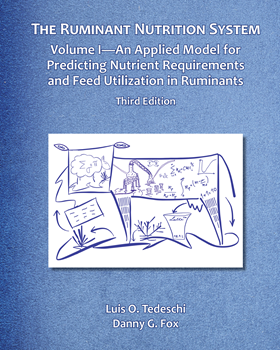
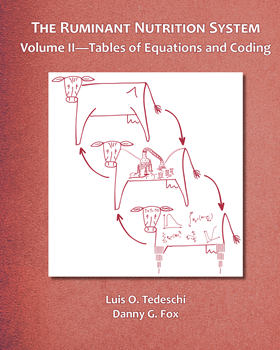
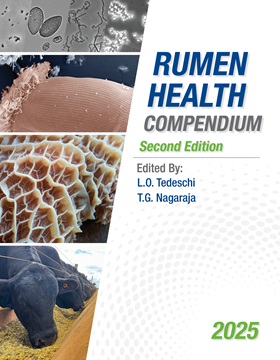
Brief Synopsis of Mathematical Nutrition Models
For approximately 55 years, computer models have been used as Decision Support Systems (DSS) to apply scientific knowledge to virtually every branch of science: from life sciences (e.g., development of the molecular structure of drugs and the management and planning for sustainable production of foods) to earth sciences (e.g., space exploration and global warming). Humankind has benefited tremendously by using DSS in specific areas for which experimentation is practically impossible or infeasible. Decision Support Systems (also referred to as Smart Decision Tools) can be broadly categorized into five classes: communication-driven, data-driven, document-driven, knowledge-driven, and model-driven (Powers, 2007, or PDF). In the late 1960s, data-driven and model-driven DSS were built based on scientific knowledge, theory development, and operational research concepts. However, it was not until the advancement of microcomputers and software in the mid-1980s that DSS became user friendly and started being applied practically. The development of DSS was tightly connected to the evolution of the architecture and processing power of microcomputers.
Ruminant animals are widely utilized to convert human-inedible feedstuffs to nutritious food under widely varying conditions around the world. The goals of enhancing ruminant nutrition are to improve productivity, reduce resource use, and protect the environment. However, scientists often have to extrapolate nutrient requirements and feed values developed under standardized, controlled, laboratory research conditions to all combinations of cattle types, feeds, and environmental and management conditions. In these cases, DSS can be used as virtual simulators to predict nutritional requirements and feed utilization in a variety of production settings.
The Large Ruminant Nutrition System (LRNS) is a computer model that estimates beef and dairy cattle nutrient requirements and supply under specific conditions of animal type, environment (climatic factors), management, and physicochemical composition of available feeds. Accounting for farm-specific management, environmental, and dietary characteristics has enabled more accurate prediction of cattle growth, milk production, and nutrient excretion in diverse production situations have been possible. The LRNS uses the basic computational engine of the Cornell Net Carbohydrate and Protein System (CNCPS) model, version 5, with additional modifications and implementations.
In collaboration with Cornell University and the University of Sassari in Italy, we developed the Small Ruminant Nutrition System (SRNS). The SRNS, based on the structure of the CNCPS for Sheep, is a computer model for predicting the nutrient requirements of sheep and feed biological values on farms. The SRNS predicts energy, protein, calcium and phosphorus requirements, accounting for animal factors (e.g., body weight, age, insulation, movement, milk production and composition, body reserves, mature weight, and pregnancy) and environmental factors (e.g., current and previous temperature, wind, and rainfall) factors. Feed biological values are predicted based on the pool size and fractional degradation and passage rates of carbohydrate and protein fractions, ruminal microbial growth, and physically effective fiber. The system predicts dry matter intake separately for different sheep categories based on equations developed for sheep fed indoors and on pasture. Based on this information, the SRNS predicts the energy balance of the animals. Energy balance is used to predict adult sheep’s body condition score, body weight variations, and, in lactating ewes, the amount of milk produced. For growing sheep, based on the energy balance and on the relative size of the lambs, the SRNS predicts average daily gain and the composition of the gain (fat, protein, water, and minerals). For feed biological values, the SRNS predicts ruminal pH based on dietary physically effective fiber, rumen nitrogen and peptide balances, the digestibility of each nutrient by the rumen and by the whole digestive tract, metabolizable protein from ruminal microbial protein and ruminally undegraded feed protein, and the energy cost of urea production and excretion. The system also predicts fecal and urinary excretions for each nutrient.
The Cattle Value Discovery System for growing cattle (CVDS) represents an evolution of a growth model first published by Fox and Black (1984) to account for differences in breed type and mature size when predicting performance and profitability of feedlot cattle with alternative management systems. Since then, modifications to the system, summarized by Tedeschi, et al. (2004), have improved its accuracy to account for more of the variation in nutrient requirements and performance of growing beef cattle. The CVDS was developed for use in individual cattle management for growing beef cattle, and it provides (1) prediction of daily gain, incremental cost of gain and days to finish to optimize profits and marketing decisions while marketing within the window of acceptable carcass weights and composition; (2) predictions of carcass composition during growth to avoid discounts for under or over-weight carcasses and excess backfat; and (3) allocation of feed fed to pens to individual animals for the purpose of sorting of individuals into pens by days to reach target body composition and maximum individual profitability. This allows mixed ownership of individuals in pens, determination of individual animal cost of gain for the purposes of billing feed and predicting incremental cost of gain, and provision of information that can be used to select for feed efficiency and profitability.
A more detailed discussion of the history of these and other mathematical nutrition models as well as their future applications can be found in this article.

Why Mathematical Nutrition Models?
Mathematical ruminant nutrition models can be used to integrate our knowledge of feed, intake, and digestion and passage rates upon feed energy values, escape of dietary protein, and microbial growth efficiency. They can be valuable tools for estimating animal requirements and nutrients derived from feeds in each unique farm production scenario, and thus can have an important role in providing information that can be used in the decision-making process to enhance the feeding system (Tedeschi et al., 2005b). By accounting for farm-specific animal, feed, and environmental characteristics, more accurate prediction of dietary nutrient requirements for maintenance, growth and milk production of cattle and nutrient excretion in diverse production situations is possible (Fox et al., 2004).
In the United States, livestock farms are under increasing pressure to reduce nutrient accumulation on the farm and manure nutrient excretions in order to meet environmental regulations (Fox et al., 2006). The Natural Resources Conservation Service (NRCS), an office of the United States Department of Agriculture (USDA), has identified the need to improve feed management in concentrated animal feeding operations (CAFO) to reduce manure nutrients. The USDA-NRCS has developed a national conservation practice standard for feed management (#592; USDA-NRCS, 2003) to be used as part of the nutrient management ( #590; USDA-NRCS, 2006) planning process. The purpose of a feed management plan is (1) to supply the quantity of available nutrients required by livestock while reducing the quantity of nutrients excreted, and (2) to improve net farm income by feeding nutrients more efficiently.
The development of feeding and nutrient management plans is complex and requires the integration of a large amount of research and knowledge information. Therefore, mathematical nutrition models can be used to assist in the deployment of technology that meets governmental regulations by facilitating the application and development of site-specific plans. Furthermore, mechanistic models more accurately account for animal and crop requirements, and manure and soil management than fixed, tabular guidelines because they can be customized and calibrated for site-specific characteristics and recommendations (Tedeschi et al., 2005a; Tedeschi et al., 2005b).
The identification of cattle requirements and formulating diets to meet those requirements more accurately is the best current strategy to minimize nutrient output per kg of meat or milk produced. The terms precision feeding and phase feeding have been widely used to describe nutrient management practices that result in reduced excretion of nutrients by CAFO. Both terms refer to a more precise nutrition system, where nutritionists meet cattle nutritional needs without supplying nutrients in excess, reducing outputs and inputs. Phase feeding of protein or protein withdrawal is a systematic method that applies precision feeding concepts to different phases of animal growth to accurately meet their nutrient requirements during the feeding period. Phase feeding involves formulating and providing more specific rations during growth-specific periods as the animal matures (Vasconcelos et al., 2007).
Mathematical models of ruminant nutrition have been employed for over three decades (Chalupa and Boston 2003) and have stimulated improvements in feeding cattle. More complete data sets available in recent years combined with different mathematical approaches have allowed us to improve nutrition models. Several mathematical models of ruminant nutrition have been develop in the past (Tedeschi et al. 2005b) and it is likely that frequency of use will increase to support decision making not only in the nutrition of cattle, but also for other aspects including farm economics, animal management, and assessment of environmental impact ( Tylutki et al. 2004).
The development and application of mathematical models are essential in several branches of the scientific research domain. Notably, predictive models are used to estimate the outcomes of experiments that cannot be practically (or ethically) conducted, directly measured, are cost prohibitive, or simply because there is plenty of available data and the collection of new data is neither justifiable nor acceptable. Even though, models are generally accepted by the scientific community, the identification of their adequacy for predictive purposes is extremely important in building confidence and acceptance of the predictions in broader situations.
The need to evaluate the correctness of model predictions has been widely discussed and several techniques have been proposed (Easterling and Berger, 2002; Hamilton, 1991; Tedeschi, 2006). Nonetheless, most evaluations are superficial and provide little or no information regarding the ability of a model in predicting future outcomes. This can be partially explained because most mathematical models are designed to be static, deterministic, and range-dependent, implying that there is a range of optimum predictive ability and often they have a narrower and site-specific application rather than a broader one. A second reason is related to the difficult in assessing the suitability of mathematical models due to the intrinsic unaccounted for variation of the database; thus, affecting the results of the evaluation process. A thorough and unbiased evaluation of a model is a requisite not only to build confidence in the model’s predictions, but also in designing more resilient models. Lastly, a third reason lies in using the evaluation process to prove the rightness and robustness of a mathematical model or even to promote its acceptance and usability by others (Sterman, 2002).
"Most of our current food production systems are based on maximising productivity and profitability with inadequate concern for protecting or regenerating the environment in the process. With a world population that is predicted to reach 9.55 billion by 2050, increasing pressure is being placed on global food production. Doing so while reducing the impact on the environment requires crop, soil and animal scientists around the world to come up with quick and effective solutions. Livestock farming alone is one of the critical global contributors to greenhouse gases – accounting for up to 14% of emissions, depending on the production system. Other negative environmental impacts of the industry include nutrient run-off that pollutes water bodies, soil erosion, and the consumption of non-renewable resources. These adverse environmental changes quickly offset improved agricultural productivity, through degradation of soil quality, increased warming, the resurgence of diseases and depletion of biodiversity, among many other outcomes. Indeed, meeting the future food requirements of our global population is not possible without environmental protection. In short, to ensure that human population growth does not outstrip our ability to produce food, we must look after the natural resources that are at the very heart of the industry – so that they will be available for future generations. Furthermore, it is clear that any increase in food production must be achieved through enhanced yield, rather than expanding land area, as the latter would further increase the burden on the environment." |
|
Read the complete article at Scientia, or download the PDF here. |
Press Releases and Newsletters
- April 26, 2024. How can AI add value on the farm? SouthWest FarmPress by Andy Castillo and Shelley E. Huguley.
- March 8, 2024. A ‘smart’ examination to improve livestock management efficiency. AgriLife Today by Kay Ledbetter.
- March 30, 2022. Texas A&M AgriLife faculty selected for high-level campus awards. AgriLife Today by Paul Schattenberg.
- October 22, 2020. Innovative agricultural solutions necessary to advance human health, sustain natural resources. AgriLife Today by Carrie Baker.
- September 18, 2020. AgriLife Research expert uses math to predict environmental impacts of livestock production. AgriLife Today By Kay Ledbetter.
- July 14, 2020. Modelling a Sustainable Future for Livestock Production. Scientia.
- September 16, 2019. Texas A&M student develops video game for working cattle. AgriLife Today by Laura Muntean.
- October 22, 2014. Modeling Research Helping Reduce Emissions, Add Profit to Beef Production. Beef Magazine.
- October 20, 2014. Nutrition modeling helps reduce cattle emissions (PDF). Feedsfuffs by Tim Lundeen.
Other Links
- A comprehensive list of modeling environments is available here, includingAnyLogic, ExtendSim, Mathematica and System Modeler, MATLAB, NetLogo, PowerSim, Stella and iThink, Vensim and Ventity, and VisSim.
- BioModels: A repository of mathematical models of biological and biomedical systems
- National Animal Nutrition Program (NANP)
- System Dynamics Society
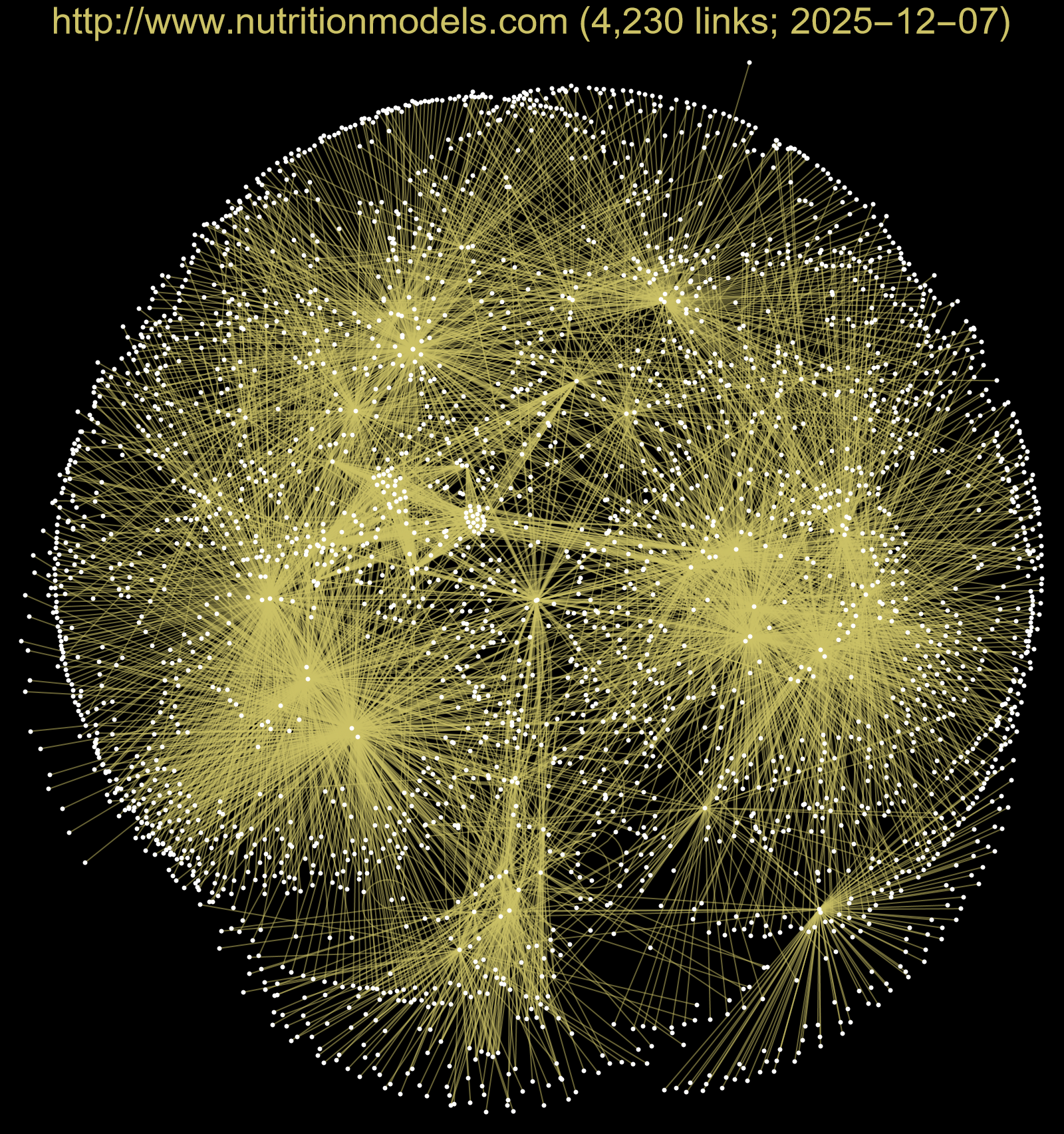
Graphical Network
 |